
Global Steel Market Outlook 2026: How Will Demand for Steel Coils and Plates Change?

1. Global Steel Demand Remains Stable in 2026
The global steel industry is experiencing a period of market adjustment and structural transformation in 2026. Despite ongoing economic uncertainty, infrastructure construction, manufacturing development, and energy projects continue to support steel consumption.
According to the latest Short Range Outlook released by the World Steel Association (worldsteel) on October 12, 2026, global steel demand is expected to remain essentially unchanged at approximately 1.722 billion tonnes in 2026.
In 2027, global steel demand is forecast to increase by 1.7%, reaching approximately 1.752 billion tonnes.
These forecasts indicate that the global steel market is undergoing a gradual adjustment, with significant differences in demand across regions and downstream industries.
For steel suppliers and international buyers, demand for products such as hot rolled steel coils, cold rolled steel coils, galvanized steel coils, and steel plates will continue to be influenced by developments in construction, automotive manufacturing, machinery production, and energy infrastructure.
2. India and Southeast Asia Drive Regional Steel Demand Growth
Although global steel demand is expected to remain stable in 2026, emerging markets such as India and Southeast Asia continue to demonstrate strong growth potential.
According to worldsteel, India's steel demand is forecast to increase by 7.9% in 2026 and 8.0% in 2027.
This growth is primarily supported by infrastructure construction, manufacturing expansion, real estate investment, and energy projects.
Meanwhile, steel demand in the ASEAN-5 economies is expected to grow by 5.2% in 2026, with Vietnam showing particularly strong market performance.
As industrialization continues across these regions, construction structures, industrial facilities, machinery manufacturing, and transportation infrastructure are expected to generate demand for various steel products.
Hot rolled steel coils, structural steel plates, and other steel materials may benefit from investment in infrastructure and industrial development.
However, actual demand for specific steel products will depend on local industrial conditions, project schedules, and available steel supply.
3. Hot Rolled Steel Coils: Essential Materials for Infrastructure and Manufacturing
Hot rolled steel coil (HRC) is one of the most widely used materials in the global steel industry.
It is commonly used in structural steel fabrication, machinery manufacturing, automotive components, pipe production, and other industrial applications.
As infrastructure construction and manufacturing investment continue in several emerging markets, hot rolled steel coils are expected to remain important industrial materials.
However, the global HRC market also faces challenges related to excess production capacity and price competition.
According to the OECD Steel Outlook 2026, global steelmaking capacity continues to expand despite relatively weak demand growth in certain markets.
The report highlights significant regional differences in hot rolled coil prices. In early 2026, HRC prices in the United States and European markets were considerably higher than those in China.
These differences reflect the complexity of global steel trade, production costs, trade policies, and regional supply-demand conditions.
For international buyers, purchasing hot rolled steel coils requires careful consideration of material grades, thickness, width, quality standards, transportation costs, and overall purchasing expenses.
4. Cold Rolled Steel Coils: Manufacturing Development Influences Market Demand
Cold rolled steel coil (CRC) is generally produced by processing hot rolled steel through cold rolling operations to achieve more precise dimensions and improved surface quality.
Cold rolled steel coils are widely used in automotive manufacturing, household appliances, metal furniture, electrical equipment, and precision metal processing.
Compared with hot rolled steel coils, cold rolled products generally offer better dimensional accuracy and surface finish, making them suitable for applications requiring higher precision and appearance standards.
In 2026, manufacturing development continues to vary across global markets.
Industrial expansion in India and certain Southeast Asian countries may provide support for cold rolled steel coil demand.
Meanwhile, some manufacturing sectors in Europe continue to face weak demand and cost pressures.
For CRC buyers, thickness tolerance, surface quality, mechanical properties, and processing suitability remain important purchasing considerations.
Looking ahead, the cold rolled steel coil market will continue to be influenced by developments in the automotive, appliance, and other downstream manufacturing industries.
5. Galvanized and Prepainted Steel Coils: Important Materials for Construction and Industrial Applications
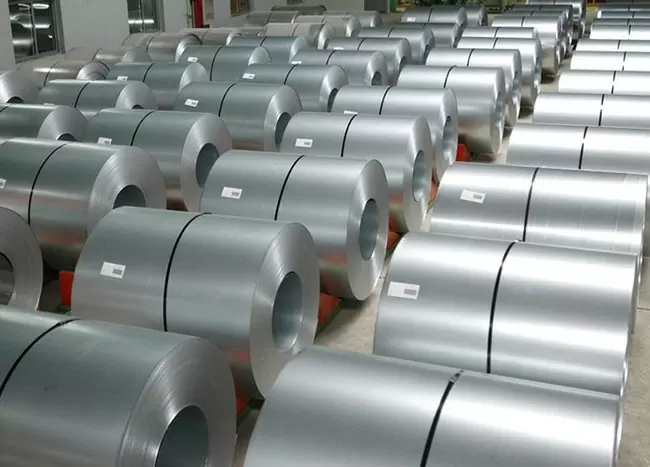
In addition to hot rolled and cold rolled products, galvanized steel coils and prepainted steel coils are important products in international steel trade.
Galvanized Steel Coil
Galvanized steel coils are produced by applying a protective zinc coating to steel surfaces to improve corrosion resistance.
These products are widely used in building roofs, wall systems, ventilation ducts, automotive components, and household appliances.
As infrastructure construction and industrial development continue, galvanized steel coils remain important for applications requiring corrosion protection.
International buyers should carefully evaluate zinc coating weight, base metal thickness, steel grade, and surface quality when selecting galvanized steel products.
Prepainted Steel Coil
Prepainted steel coils are manufactured by applying organic coatings to pretreated steel surfaces. Galvanized steel and aluminum-zinc coated steel are commonly used as base materials.
Prepainted steel coils are widely used in building roofing, wall panels, industrial facilities, household appliances, and decorative applications.
In regions experiencing construction and industrial development, prepainted steel coils may continue to benefit from market demand.
For buyers, coating type, coating thickness, color, corrosion resistance, and base metal quality are important factors affecting product selection.
However, growth in overall steel demand does not necessarily mean that all galvanized and prepainted steel markets will grow at the same rate.
Demand for these products must be evaluated according to local construction activity, manufacturing conditions, and regional market requirements.
6. Steel Plate Market: Opportunities in Energy, Machinery, and Infrastructure
Steel plate is an essential material widely used in industrial production and large-scale engineering projects.
Depending on thickness, steel grade, and performance requirements, steel plates can be used in construction machinery, pressure vessels, shipbuilding, bridge construction, and energy facilities.
In 2026, several countries continue to invest in energy infrastructure, transportation systems, and industrial development.
For example, worldsteel forecasts that steel demand in the United States will increase by 2.0% in 2026, supported mainly by investment in data centers, energy infrastructure, and selected manufacturing sectors.
These industries may create opportunities for steel plate products that meet specific technical requirements.
For international steel plate buyers, material standards, steel grades, dimensional tolerances, mechanical properties, and material test certificates remain essential purchasing considerations.
7. How Global Steel Overcapacity Affects the Steel Materials Market
Despite demand growth in certain regions, the global steel industry continues to face challenges related to excess production capacity.
According to the OECD Steel Outlook 2026, global excess steelmaking capacity could reach approximately 745 million tonnes by 2028.
Continued capacity expansion may increase market competition and place pressure on the prices of certain steel products.
For the steel coil and plate markets, international trade policies, raw material costs, energy prices, and regional supply-demand conditions may all influence future price movements.
Under these circumstances, steel buyers need to pay greater attention to supplier reliability, product quality, delivery capabilities, and total procurement costs.
At the same time, steel suppliers should adjust their product portfolios according to regional market requirements and improve supply chain management efficiency.
8. Steel Coil and Plate Market Outlook for 2026
Based on global steel demand forecasts and regional market developments, several important trends may influence the steel coil and plate markets in 2026.
First, overall global steel demand is expected to remain stable, while emerging markets such as India and Southeast Asia continue to demonstrate growth potential.
Second, demand for hot rolled steel coils and steel plates will remain closely connected to infrastructure construction, energy investment, and machinery manufacturing.
Third, cold rolled steel coils, galvanized steel coils, and prepainted steel coils will continue to be influenced by developments in the automotive, household appliance, construction, and manufacturing industries.
In addition, global steel overcapacity and changes in international trade policies may continue to affect steel prices and cross-border purchasing decisions.
For steel suppliers and international buyers, understanding market developments, confirming technical specifications, and selecting reliable supply channels can help improve procurement efficiency and reduce trading risks.
9. Conclusion
According to the latest World Steel Association forecast, global steel demand is expected to remain stable in 2026 before returning to moderate growth in 2027.
Although the global steel market continues to face challenges related to excess capacity, price fluctuations, and trade uncertainty, India, Southeast Asia, and other regions with active industrial investment continue to offer growth potential.
Hot rolled steel coils, cold rolled steel coils, galvanized steel coils, prepainted steel coils, and steel plates remain essential industrial materials.
Their market demand will continue to be influenced by construction, manufacturing, energy development, and infrastructure investment.
For international steel buyers, monitoring market trends, understanding product specifications, ensuring compliance with quality standards, and maintaining reliable supply chains will remain important factors when developing steel procurement strategies in 2026.
 High-Strength Steel Materials Continue to Evolve as Lightweighting and Higher Strength Drive Development
 Cold Mill Rolls: Technology Upgrades Support Higher Precision and Rolling Performance
 Hot-Rolled Coil: Baosteel Raises September Prices as Market Watches for Demand Recovery
 Stainless Steel Supports Green Manufacturing and the Circular Economy
 Why Stainless Steel Remains a Preferred Industrial Material
- Global Market Trends for Hot Rolled Stainless Steel Coil and Sheet
 From "Qualified" to "Premium": Full-Traceability Systems Force Process Refinement
 Advantages and Applications of Stainless Steel Coils
 2026 Steel Coil Market Outlook: Capacity Expansion, Inventory Divergence, and Trade Landscape Reshaping
 From Pipe to Plate, Coil to Bar: How Carbon Steel, Galvanized Steel, and Stainless Steel Meet Diverse Industrial Demands
 Main applications of hot rolled stainless steel coil and sheet
 Main stainless steel grades
 main types of finishings for steel coils