
2026 Steel Coil Market Outlook: Capacity Expansion, Inventory Divergence, and Trade Landscape Reshaping
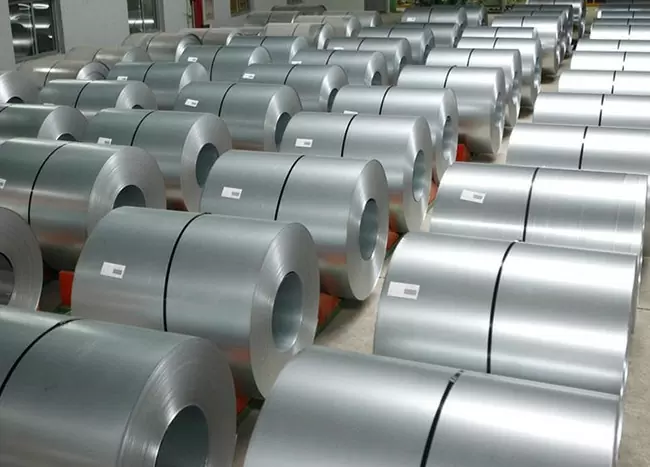
I. Capacity: The 410 Million Tonne Era and the Final Commissioning Peak in 2026-2027
From 2021 to 2025, driven by shifts in core demand structure and upgrades in export trade, China's hot-rolled coil (HRC) capacity entered a new peak period of commissioning. According to Shanghai Metals Market (SMM) statistics, by the end of 2025, China's HRC capacity reached approximately 410 million tonnes, up nearly 39% from the 300 million tonne level in 2020.
Two key factors drove this expansion. First, following the comprehensive downturn of the real estate sector in 2021, steel mill profitability in construction materials deteriorated, prompting mills to gradually shift focus to flat products led by hot-rolled coils. Second, the manufacturing sector gradually took over as the center of economic growth, with major industries such as automotive and home appliances seeing sustained production increases. China's automotive production grew 39% from 2021 levels by 2024, while combined output of four major home appliance categories increased by 37%.
Looking ahead, SMM data indicates that China still has nearly 55 million tonnes of capacity under construction or in planning stages for 2026-2030, with approximately 15.9 million tonnes expected to commission in 2026 and around 10.6 million tonnes in 2027. Given persistent overcapacity and escalating overseas trade sanctions, 2026-2027 may become the final peak period for HRC capacity commissioning in China.
II. Inventory: High Social Inventory, Low Mill Inventory — "Passive Stockpiling" Reveals Weak Demand
In the first half of 2026, China's steel inventory exhibited a highly distinctive pattern: mill inventories remained persistently low, while social inventories were far higher than historical levels for the same period. As of June 12, 2026, social inventories of the five major steel products reached 11.32 million tonnes, up 2.82 million tonnes (+33%) from the beginning of the year and 2.05 million tonnes (+22%) year-on-year. In the same period, mill inventories of the five major products stood at 4.28 million tonnes, flat year-on-year.
By product category, HRC social inventories reached 3.4941 million tonnes, up 805,000 tonnes (+30%) year-on-year, while HRC mill inventories were only 710,600 tonnes, actually declining by 55,000 tonnes year-on-year. The structural divergence of "sharp social inventory growth + slight mill inventory decline" is highly pronounced.
The root cause lies in weak demand. HRC downstream demand contracted significantly in 2026. On the export front, HRC exports from January to April totaled 4.49 million tonnes, down 3.03 million tonnes or 40% year-on-year. Domestically, automotive production fell 4.6% year-on-year, while home appliance output declined 0.7%. Against this demand contraction, spot market liquidity dried up, and traders, unable to find sufficient downstream buyers, were forced to register spot materials as futures warehouse receipts — a phenomenon of "passive warehousing" representing typical "passive stockpiling" rather than active hoarding.
Entering the traditional slack season of June-July, the plum rain season combined with high temperatures further suppresses downstream construction progress, while mills remain in production expansion mode rather than cuts. Industry analysts warn that the contradiction between "high output and high inventory" will intensify during the period of weakest demand, with market inflection risk increasing.
III. Trade: Anti-Dumping Investigations Intensify, Reshaping Global Steel Coil Trade
In 2026, international trade frictions in the steel coil sector have significantly escalated. On May 31, Japan's Ministry of Economy, Trade and Industry and the Ministry of Finance announced the launch of anti-dumping investigations into hot-rolled and cold-rolled steel coils, sheets, and strips originating from China, South Korea, and Taiwan. The probe was requested by major Japanese producers including Nippon Steel and JFE Steel in February 2025, alleging that the targeted products were being dumped into Japan at prices up to 50% below "normal value". The Japan Iron and Steel Federation stated that China's declining domestic demand has led to massive steel outflows overseas, prompting countries and regions to adopt trade measures, and that Japan similarly faces an urgent need for appropriate trade remedies.
This is not an isolated case. In December 2025, Turkey imposed a 3.95% anti-dumping duty on certain Chinese steel products, and in early May 2026, Australia levied tariffs of up to 82% on HRC from China. A dense network of trade barriers targeting Chinese steel coils is rapidly taking shape globally.
The European market, too, is struggling to balance protectionism against weak demand. According to EUROMETAL reports, cold-rolled coil (CRC) and hot-dip galvanized (HDG) coil prices in Northwestern Europe remained in the €800-830/tonne range (approximately $831-967/tonne), while HRC prices have repeatedly dipped below the €700/tonne mark since April. Mills point to limited import opportunities, rising production costs, and new EU safeguard measures to justify price increases, while buyers point to weak end-user demand, fierce distributor competition, and persistently high inventory levels throughout the supply chain, firmly resisting price hikes.
IV. Outlook: The Balancing Act Between Demand Stabilization and Supply Contraction
Looking ahead, industry research institutions believe that as the negative drag from the real estate sector on steel demand significantly weakens, steel demand from infrastructure and manufacturing is expected to grow steadily. On the supply side, with approximately 60% of steel mills currently operating at a loss, market-driven capacity exits have begun to emerge, and the expectation of supply-side contraction should support gradual improvement in steel market fundamentals.
However, the structural contradiction of high social inventory and low mill inventory has not disappeared — it has merely been delayed and transferred. The core of market dynamics will gradually shift from "current supply and demand" to "the speed and manner of inventory liquidation." Key inflection signals to monitor going forward include whether rebar apparent demand can remain above 2 million tonnes per week and whether steel exports can achieve sustained recovery.
 Cold Mill Rolls: Technology Upgrades Support Higher Precision and Rolling Performance
  Hot-Rolled Coil: Baosteel Raises September Prices as Market Watches for Demand Recovery
  Stainless Steel Supports Green Manufacturing and the Circular Economy
  Why Stainless Steel Remains a Preferred Industrial Material
  Global Market Trends for Hot Rolled Stainless Steel Coil and Sheet
  From "Qualified" to "Premium": Full-Traceability Systems Force Process Refinement
  Advantages and Applications of Stainless Steel Coils
  From Pipe to Plate, Coil to Bar: How Carbon Steel, Galvanized Steel, and Stainless Steel Meet Diverse Industrial Demands
  Main applications of hot rolled stainless steel coil and sheet
 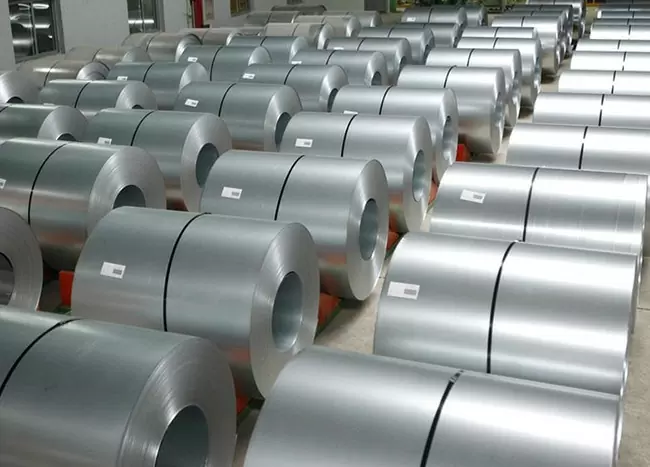 Main stainless steel grades
 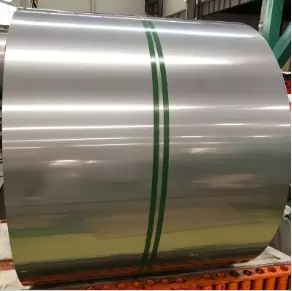 main types of finishings for steel coils